Hé oui, il ne manquait plus que nos produits déshydratés en magasin! Comme nous avons plusieurs produits déshydratés et que nous ne pouvions pas tous les sélectionner pour la mise en marché du détail, nous avons sélectionné notre poudre d’ail biologique et avons concocté un sel de fleurs d’ail spécialement pour les supermarchés.
Les deux produits sont évidemment certifiés Aliments du Québec et certifiés biologiques (par Ecocert Canada). L’ail en poudre biologique et le sel de fleurs d’ail biologique sont offerts sous forme de poudre fine très aromatique et gouteuse.
L’ail en poudre convient pour ceux qui s’assument dans l’ail. La poudre ne donne pas le goût piquant de l’ail mais elle conserve sa saveur. Il peut remplacer l’ail frais et peut aussi être saupoudré sur une panoplie de repas…Voici notre top 5:
le spaghetti à la viande gratiné
la pizza (autant celle faite à la maison autant que celle ramenée du restaurant)
le poulet cuit entier ou en crapaudine avec d’autres épices pour une peau croustillante et savoureuse
Le sel de fleurs d’ail a tant qu’à lui un goût bien différent. Les goût des fleurs d’ail déshydratées rappelle la ciboulette et le persil et peut remplacer ces fines herbes sans problèmes. Le sel n’est pas trop présent et sert à mettre en valeur le goût herbal et délicat des fleurs d’ail. Voici notre top 5 d’idées pour saupoudrer notre sel de fleurs d’ail:
Concombres coupés;
Salades;
Maïs estival en épis avec du beurre;
Potages;
Poissons et fruits de mer
Épis de maïs avec sel de fleurs d’ail et beurre
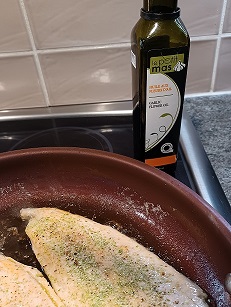
Filet de truite et sel de fleurs d’ail et poivre
Il est maintenant temps de demander nos déshydratés à votre épicier préféré! Votre aide est toujours précieuse si nous désirons atteindre la même distribution que nos fleurs d’ail fermentées! Merci!
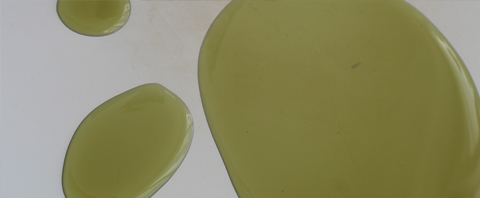
En 2016, nous avons mis en vente, sur notre boutique en ligne, notre fameuse huile aux fleurs d’ail. Cette huile infusée avec nos fleurs d’ail fermentées s’imprègne non seulement de son goût unique et savoureux, mais aussi de sa couleur verte.
Couleur verte de l’huile aux fleurs d’ail du Petit Mas
Nos clients, adeptes de nos produits d’ail, ont découvert notre huile aux fleurs d’ail et l’ont adoptée ! Devant la demande croissante pour notre huile, nous avons décidé après 5 ans, de la produire à plus grande échelle !
Qui dit grande échelle, implique une distribution et disponibilité partout au Québec! Ainsi, notre fameuse huile aux fleurs d’ail est maintenant disponible en magasin en plus de notre boutique en ligne! Vous ne la trouvez pas ? Demandez-la à votre gérant(e) d’épicerie, vous avez plus de pouvoir que ce que vous pensez !
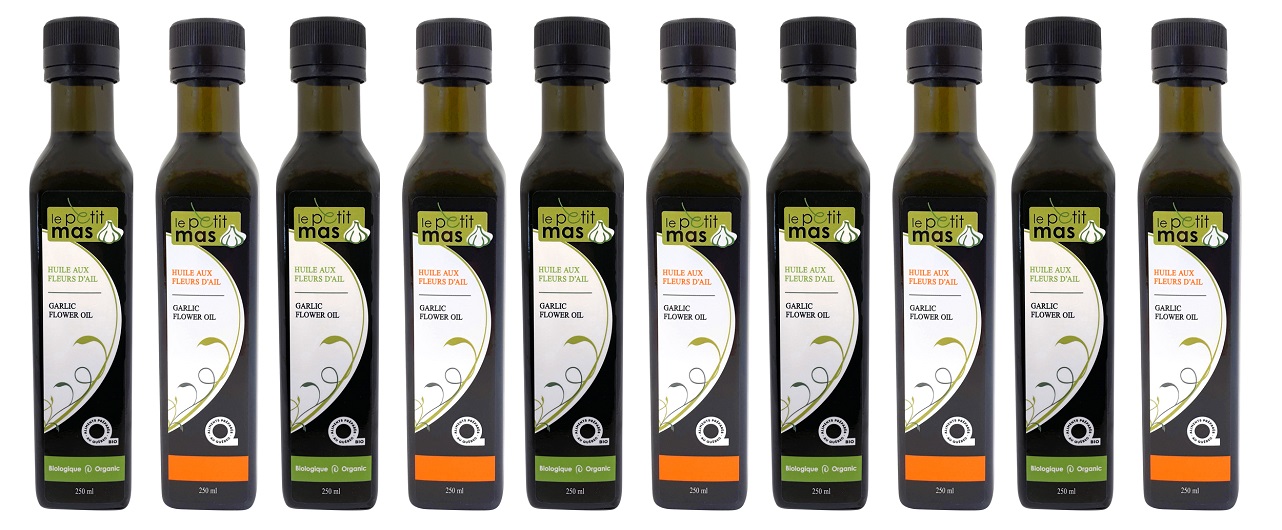
Étiquette orange ou verte, quelle différence ? Comme nos fleurs d’ail fermentées, notre huile est offerte en version régulière (bandeau orange) ou en version biologique (bandeau vert) certifiée par Ecocert Canada. Même goût, une question de choix et de prix.
Vous avez votre bouteille d’huile en main et vous vous demandez comment conserver votre huile aux fleurs d’ail ?
Notre huile aux fleurs d’ail est stable pendant 3 ans une fois mise en bouteille à température ambiante tout comme nos fleurs d’ail fermentées. Vous devriez donc être en mesure de la consommer d’ici deux ans une fois la bouteille ouverte! Laissez votre bouteille là où elle ne sera pas oubliée…à côté du four ? Dans votre armoire avec vos autres huiles ? Dans le frigo à côté de votre pot de fleurs d’ail fermentées ?
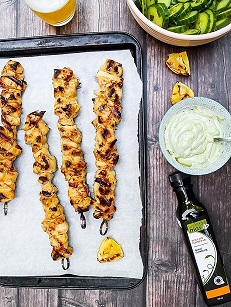
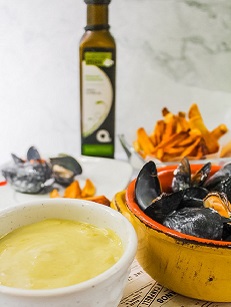
Comme un consommateur qui goûte à un nouveau produit, nous avons appris à cuisiner avec notre huile et nous sommes devenus dépendants ! Voici notre top 5 d’idées recettes! Bonne dégustation!
Salades : Disposez simplement dans un bol vos verdures, vos légumes, etc…ajoutez un filet de vinaigre (balsamique ou autre) et un filet double d’huile aux fleurs d’ail !
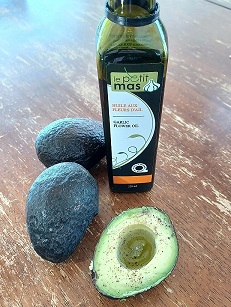
2. Avocats : Coupez un avocat mûr en deux. Retirez le noyau et remplacez-le par de l’huile aux fleurs d’ail ! Salez et poivrez. Dégustez à la cuillère !
3. Assiette de légumes : Disposez, dans une grande assiette, des légumes (et fruits) crus (tomates, concombres, radis, pêches, fraises) ou cuits (asperges, têtes de violon, haricots, betteraves), en tranches ou morceaux, ajoutez un fromage frais en tranches, salez et poivrez. Ajoutez un filet de vinaigre (balsamique) et un filet double d’huile aux fleurs d’ail !
Article et recherche historique réalisés par: Storica
Savez-vous depuis quand on mange de l’ail dans les Cantons-de-l’Est? Longtemps, très longtemps. Premiers occupants du territoire, le peuple Abénakis sillonne les lacs, les rivières et les forêts pendant des milliers d’années. Bien sûr, à cette époque, il n’est pas question des variétés au bulbe charnu que l’on consomme aujourd’hui, l’Allium sativum n’a pas encore traversé l’Atlantique! Alors que mange-t’on? Une variété indigène d’Amérique du Nord (Allium tricoccum) mieux connue au Québec sous le nom d’ail des bois!
L’écrivain québécois Bernard Assiniwi, d’origine algonquine, publie un recueil de recettes autochtones en 1972, rassemblant un peu pêle-mêle des bribes de patrimoine culinaire Abénakis et Mohawk, mais aussi Cri, Mi’gmac, Huron, Tuscarora, etc. Heureusement, il identifie l’origine culturelle de chacune des recettes, ce qui nous donne un point de départ dans notre petite enquête sur la consommation de l’ail dans les Cantons-de-l’Est.
D’abord, il faut savoir que la cuisine traditionnelle autochtone ne comprends ni sel ni poivre! Pour assaisonner leurs soupes, salades, viandes et poissons grillés, les Abénakis de l’Ouest qui séjournent entre le lac Memphrémagog et Mégantic en passant par la rivière Saint-François, utilisent des plantes sauvages comme du thym, de la menthe, du poireau sauvage, des feuilles de tussilage brûlées, des copeaux de bois (cèdre, noyer, frêne) et bien sûr, de l’ail des bois!
Dans les recettes anciennes, transmises par Bernard Assiniwi, on retrouve diverses soupes à l’ail des bois, avec du cresson, de la courge ou des graines de tournesol, ainsi que des recettes de poisson et fruits de mer et de gibier grillés avec de l’ail comme assaisonnement. Directement associée aux Algonquins – grande famille linguistique des Abénakis – on retient une recette de ce recueil en particulier : La salade verte sauvage. Cette salade de pousses printanière comprend des queues d’ail des bois, de jeunes tiges de cresson, de l’oseille des bois et des feuilles de pissenlit, le tout arrosé d’une vinaigrette à l’huile de tournesol, au vinaigre de cidre de pomme et au sel de tussilage. Pourquoi? On y reviendra!
Défrichés vers la fin du 18e siècle par des pionniers américains (loyalistes ou pas), puis par des immigrants anglais, irlandais et écossais tout au long du 19e siècle, les Cantons-de-l’Est se bâtissent un patrimoine culinaire aux souches résolument américano-britanniques. Une chose est claire : de l’ail, il n’y en a pas vraiment. On a beau scruter à la loupe les recueils de cercles de fermières, de paroisses anglicanes, et de comités de ménagères du type Universalist Church Lady Society ou United Church Women Association, partout où il pourrait avoir de l’ail, on trouve à la place des oignons et parfois un peu de poireau.
Il faut attendre le début des années 1960 pour commencer à voir des gousses d’ail se répandre dans des recettes dactylographiées. Est-ce le signe d’une ouverture progressive vers la cuisine du monde? Peut-être l’impact de la francisation des Cantons ou encore de personnalités marquantes comme Jehane Benoît qui s’établit à Sutton en 1956? Son ouvrage L’encyclopédie de la cuisine canadienne, aujourd’hui considéré comme un fondement de la cuisine québécoise parait … en 1963!
Dans les années 1990-2000 des auteurs comme Julian Armstrong, Laurent Saget, Michel Lambert et Micheline Mongrain-Dontigny commencent à s’intéresser à la cuisine régionale. Ils se rendent sur le terrain, discutent avec les gens, obtiennent des recettes familiales de la région de Brome-Missisquoi, Memphrémagog, du Haut-Saint François, Coaticook et … surprise on voit la salade printanière des Abénakis réapparaître.
En marge des livres de recettes populaires, des restaurants ou du circuit agro-alimentaire,La salade de pousses de pissenlits à l’ail des bois s’est transmise dans l’ombre, de générations en générations. Sharron Rothney, résidente d’Eaton Corner se rappelle très bien la salade de pissenlit que sa mère préparait immanquablement tous les printemps.
À peu près à la même époque, au début des années 2000 on voit surgir une nouveauté dans les livres de cuisine régionales : des recettes à partir de fleurs d’ail. Par exemple Les médaillons de porc grillés à fleur d’ail ou le Poulet à la fleur d’ail du livre La cuisine traditionnelle des Cantons-de-l’Est publié en 2002. Que se passe-t’il donc dans les années 2000?
Il faut remonter vingt ans en arrière alors que Christiane Massé et son conjoint de l’époque caressent un rêve d’agriculture biologique et d’autosuffisance alimentaire. En 1988 leur projet devient réalité avec l’achat d’une terre à Saint-Malo et la fondation du Petit Mas, à l’époque, une ferme maraîchère diversifiée. Christiane s’intéresse à l’ail, et en fait pousser un peu, comme certains autres producteurs de la région. « Dans les années 1980, les gens faisaient pousser de l’ail rose précise-t’elle, une variété à col mou. Il y avait quelques fermes dans le sud de la Montérégie, vers Saint-Rémi et Napierville, qui en faisaient des quantités un peu plus importantes mais c’était pas mal tout ».
Très intéressée par l’ail, elle se documente beaucoup. Elle entend alors parler d’un projet de recherche sur les variétés sur le point de s’achever à Chambly. Le timing est parfait! Elle se rend sur place, rencontre le chercheur qui lui remet les échantillons de 25 variétés différentes dans de petits sacs de papier brun. « C’est la Music la meilleure lui dit-il en lui remettant les bulbes, selon nos recherches, ça serait la plus fiable ». Selon les essais de Christiane, ça s’avère aussi vrai. Enchantée par le cultivar elle téléphone au ministère de l’Agriculture de l’Ontario qui la met en contact avec M. Music directement. Pendant plusieurs années elle fera le voyage dans le sud de Toronto pour se procurer la semence chez lui.
Elle travaille pendant plus de vingt ans à établir une relation de confiance avec les grandes chaînes afin de faire reconnaître la valeur et la qualité de l’ail produit localement. Au début elle se heurte à des refus catégoriques, les chaînes ne prendront son ail biologique qu’au tarif dérisoire auquel ils obtiennent l’ail chinois. Avec beaucoup de patience et encouragée par de petites victoires, elle parvient finalement à défricher le chemin et voit enfin son ail présenté dans les étalages de magasins.
Non contente d’avoir été pionnière dans la mise en marché et la culture de l’ail au Québec, c’est également Christiane qui popularise la fleur d’ail… un peu par accident! « Ça se mange en Asie la tige d’ail, c’est un légume qu’on retrouve fréquemment dans les marchés. Ils appellent ça des Garlic Scapes en Ontario. Au début, je ne savais pas que ça se mangeait avoue-t’elle candidement, ça a pris une bonne dizaine d’années avant que j’en fasse un petit peu. Un jour, c’était à la fin juillet, j’en avais un peu, je l’ai hachée, je l’ai mise dans l’huile au frigo et puis je l’ai oubliée ». À sa grande surprise, lorsqu’elle retrouve ses pots à l’automne, le mélange a fermenté et a gagné en saveur et en complexité. Elle commercialise le produit qu’elle baptise fleurs d’ail. « Au Québec les gens disaient fleurettes d’ail, mais je n’aimais pas ce nom-là », elle utilise donc fleurs d’ail, un terme qui à sa grande surprise se répand en traduction littérale jusque chez nos voisins ontariens (garlic flowers).
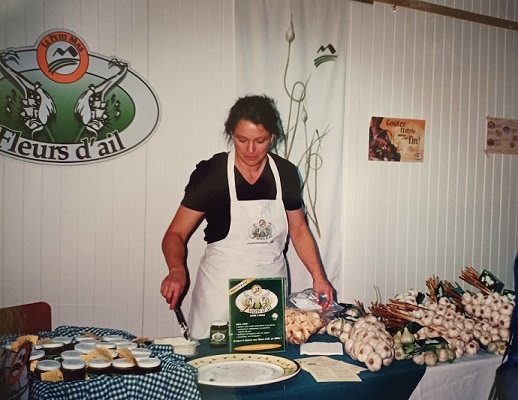
Christiane avant 2000 sans un salon de consommateurs
Aujourd’hui la reconnaissance de l’Ail du Québec va bon train alors que les fleurs d’ail ont fait leur entrée dans le patrimoine culinaire régional il y a plus de vingt ans déjà. Profitons-en pour remettre à l’honneur une recette bien de chez nous : La salade de pissenlits à l’ail avec la twist Petit Mas.
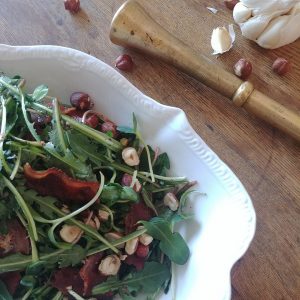
Salade de bébés pissenlits, de noisettes et vinaigrette à l’ail
Crédit photo: Storica
Voici une recette à préparer à la maison, inspirée des multiples variantes de la salade de pissenlit que l’on retrouve un peu partout dans les Cantons-de-l’Est. Certains la préparent au porc salé et aux oignons (Julian Armstrong, 1992) d’autres aux petits lardons (Association de la Culture et du Patrimoine d’Abercorn, 2007), parfois les feuilles sont braisées au vinaigre (Michel Lambert, 2017) ou servies fraîches à l’ail des bois avec un œuf dur (Laurent Saget, 1995). En voici une interprétation libre inspirée du répertoire d’ingrédients consommés par les Abénakis et des produits faciles à trouver en épicerie.
Pour la recette complète: page recetteBon appétit!